CA Kishore Harjani & CA Divya Jain, – (2026) 43 Centax 285 (Article)
Introduction
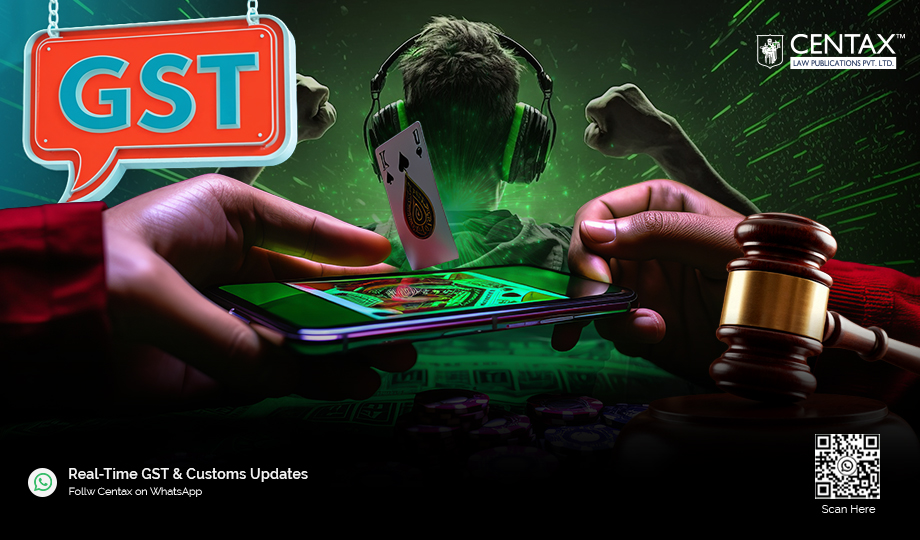
When you put money on an online rummy table, create a fantasy cricket team or take a spin of the casino wheel, what exactly are you paying for — and how much of it should the tax man collect?
That deceptively simple question evolved into one of the biggest tax battles in India’s history, involving GST demands amounting into thousands of crores of rupees. On 27 May 2026, the Supreme Court eventually provided a definitive answer.
In a landmark verdict, the Court held that Goods and Services Tax (GST) at 28 per cent is leviable on the full-face value of every bet or stakes— the entire amount a player puts in — and not merely to the small commission or “platform fee” retained by gaming companies.
The decision, in Directorate General of GST Intelligence v. Gameskraft Technologies Pvt. Ltd. [(2026) 42 Centax 495 (S.C.)], puts an end to years of litigation and confusion, while reshaping the economics of a fast-growing digital industry.
A booming industry, suddenly under the tax scanner
Online gaming has become one of the most rapidly growing segments of India’s digital economy. Cheap smartphones, affordable mobile data, easy digital payments and a young population have together turned India into one of the world’s largest gaming markets. By some industry estimates, the country accounts for nearly a fifth of the world’s gamers and records more than 11 billion mobile-game downloads every year.
The money involved is substantial too. The Indian gaming market generated about Rs.232 billion in 2024, with roughly three-quarters of that coming from games where players stake money.
It supports thousands of companies and provides employment to lakhs of people in technology, design, marketing and customer support.
But this very success placed the industry on a collision course with the tax authorities. The dispute was not really about whether online gaming should be taxed — everyone agreed it should be. The fight was about how much should be taxed: only the company’s cut, or every rupee a player stakes.
First, a simple distinction
The law draws a distinction between “online gaming” from “online money gaming.” Online gaming simply refers to playing a game over the internet, typically via digital platforms. It becomes online money gaming when players put money (or anything of value, including virtual digital assets) at stake, with a hope of winning money or a reward in return, regardless of whether the outcome depends on skill, luck, or both. It is this money-staking category that attracts GST at 28 per cent, and it is this category that the entire dispute revolved around.
How the fight began
For years, most gaming platforms operated on a simple logic:
“We are only the organisers. Players compete against each other; we just provide the table and charge a small fee.”
On that basis, companies paid GST only on the fee they retained — known in the trade as Gross Gaming Revenue, or GGR.
The tax department, however, viewed it very differently. The Directorate General of GST Intelligence (DGGI) launched investigations and issued show-cause notices to several companies, contending that staking money on an uncertain outcome amounts to, in substance, betting and gambling. Therefore, the entire pool of money staked by players is liable to tax and not just the operator’s commission. With both sides firmly dug in, the stage was set for a marathon legal battle.