Case Detail: Huarong Plastic Machinery India Plastic Ltd. Versus Commissioner of Customs, Ahmedabad (2025) 32 Centax 418 (Tri.-Ahmd)
Judiciary and Counsel Details
-
S/Shri Ramesh Nair, Member (J) and RAJU, Member (T)
-
Shri K.J. Kinariwala (Consultant), for the Appellant.
-
Shri R.R. Kurup, Superintendent (Authorized Representative), for the Respondent.
Facts of the Case
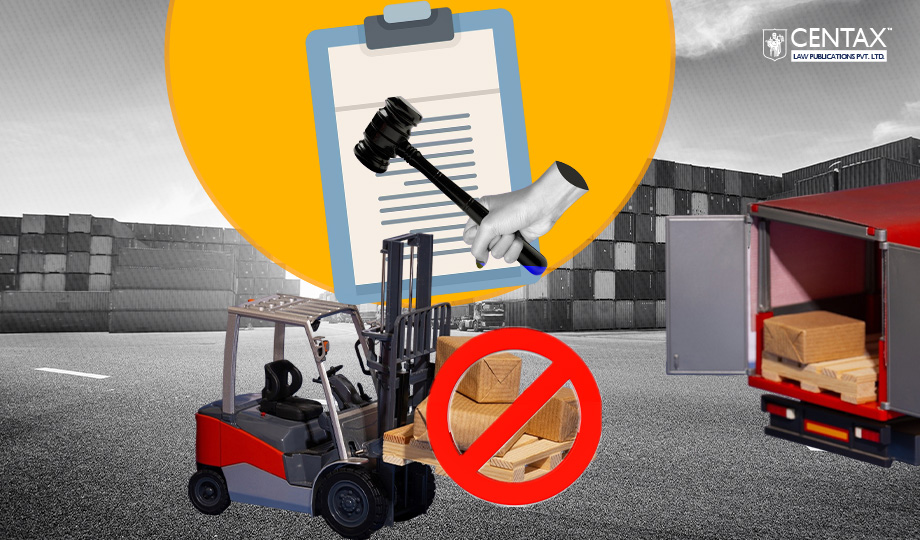
The appellant imported various components used in the assembly of Horizontal Injection Moulding Machines, alongside certain parts sourced locally and others imported separately. The jurisdictional officer under Customs alleged that the imported goods constituted complete machines in Completely Knocked Down (CKD) condition and thus attracted anti-dumping duty under Section 9A of the Customs Tariff Act, 1962. A show cause notice was issued proposing imposition of anti-dumping duty, asserting that the configuration of imported goods satisfied the criteria under Note (IV) and Note (V) of Section XVI of the HSN Explanatory Notes. The appellant submitted that the imported items neither constituted partly assembled machines nor contained the essential features of a complete machine. It was contended that the components required extensive mechanical and electrical processes such as polishing, grinding, drilling, tapping, “T” slotting, scraping, wiring, and painting. The appellant emphasized that such complex operations, including the scraping of base surfaces for alignment, could not be equated with mere assembly and hence disqualified the imports from being considered CKD units. The matter was accordingly placed before the CESTAT Ahmedabad.
CESTAT Held
The CESTAT held that the imported components could not be treated as complete or incomplete Horizontal Injection Moulding Machines in CKD condition since the individual parts required substantial fabrication and assembly using mechanical and electrical processes. The Tribunal rejected the Department of Revenue’s reliance on the presence of a user manual as indicative of complete machinery, stating that such documentation does not determine the technical completeness of the goods. It further observed that the imported goods lacked the essential characteristics of a finished or partially assembled machine and did not attract the application of Note (IV) or Note (V) of Section XVI of the HSN Explanatory Notes. Accordingly, the proposed levy of anti-dumping duty under Section 9A of the Customs Tariff Act, 1962, was held to be untenable and was set aside.
List Of Cases Cited
-
Commissioner v. Sony India Ltd. — 2008 (231) E.L.T. 385 (S.C.) — Relied [Paras 8, 13]
-
Galaxy (Tuticorin) Agencies v. Commissioner — 2009 (239) E.L.T. 478 (Tribunal) — Referred [Para 8]
-
Global Exim v. Commissioner — 2015 (318) E.L.T. 312 (Tribunal) — Referred [Para 8]
-
Green Brilliance Energy Pvt. Ltd. v. Commissioner — 2015 (325) E.L.T. 351 (Tribunal-LB) — Referred [Para 8]
-
Nippon Precision Bearing Ind. v. Collector — 1997 (90) E.L.T. 57 (Tribunal) — Referred [Para 8]
-
Union of India v. Dharamendra Textile Processors — 2008 (231) E.L.T. 3 (S.C.) — Referred [Para 10]
-
Union of India v. Tarachand Gupta — 1983 (13) E.L.T. 1456 (S.C.) — Referred [Para 8]
-
Wipro Ge Medical Systems Ld. v. Commissioner — 2006 (202) E.L.T. 141 (Tribunal) — Referred [Para 8]